




“Learn how to cook both savory (Ven Pongal) and sweet (Sakkarai Pongal) Pongal recipes with expert tips.”
🧂 1. Ven Pongal (Savory Pongal)
A comforting, lightly spiced South Indian dish made with rice and moong dal, tempered with ghee and pepper.


🧂 Ven Pongal Ingredient (Savory Pongal)
| Ingredient | Quantity |
|---|---|
| Rice (short grain) | 1 cup |
| Split yellow moong dal | 1/4 cup |
| Water | 4 cups |
| Salt | To taste |
| Ghee | 2 tbsp |
| Cumin seeds | 1 tsp |
| Black pepper (whole or crushed) | 1 tsp |
| Ginger (chopped) | 1 inch |
| Curry leaves | 8–10 leaves |
| Cashew nuts | 10 |
| Asafoetida (hing) | 1 pinch (optional) |
🔪 Instructions:
- Dry roast dal lightly until aromatic (optional).
- Cook rice & dal: Wash and pressure cook rice and dal with 4 cups water and salt for 3–4 whistles (or cook in an open pot until soft and mushy).
- Prepare tempering: In a pan, heat ghee. Add cashews, roast until golden. Add cumin, pepper, ginger, curry leaves, and hing.
- Mix: Pour tempering over cooked rice-dal mixture. Mix well and mash slightly for creamy texture.
- Serve hot with coconut chutney or gothsu (brinjal gravy).
✅ Expert Tips:
- Use more ghee for richer flavor.
- Add 1/2 tsp crushed black pepper for extra heat.
- Cook till it’s slightly mushy, like khichdi consistency.
🍯 2. Sakkarai Pongal (Sweet Pongal)
A festive rice dish sweetened with jaggery and flavored with cardamom and ghee-roasted nuts.
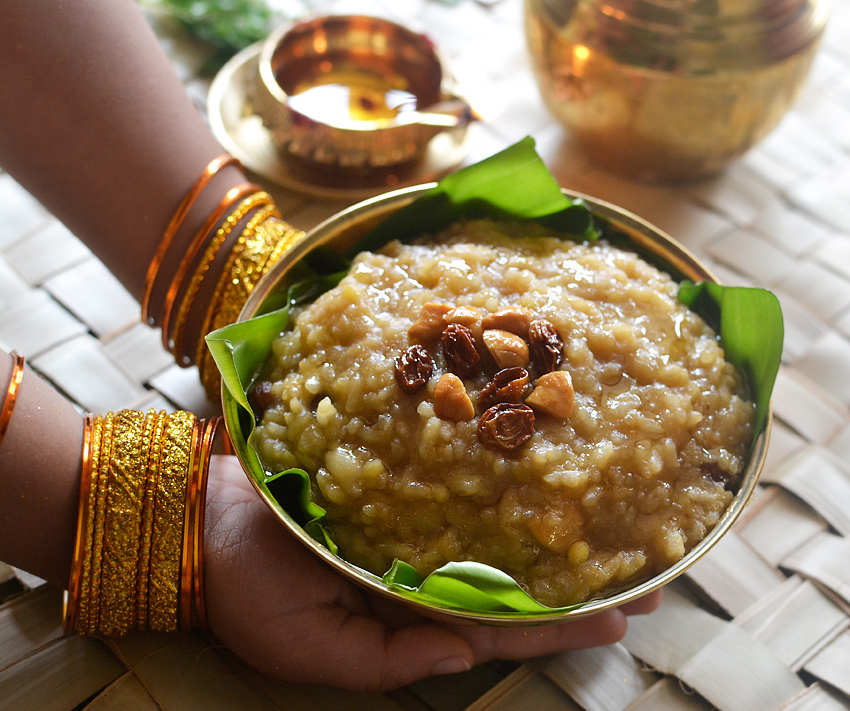
🍯 Sakkarai Pongal Ingredient (Sweet Pongal)
| Ingredient | Quantity |
|---|---|
| Rice (raw) | 1 cup |
| Split yellow moong dal | 1/4 cup |
| Water | 3 cups |
| Jaggery (grated) | 3/4 to 1 cup |
| Ghee | 2 tbsp |
| Cashew nuts | 10 |
| Raisins | 6–8 |
| Cardamom powder | 1/4 tsp |
| Grated coconut | 1 tbsp (optional) |
| Edible camphor | A tiny pinch (optional) |
| Water (for jaggery syrup) | 1/4 cup |
🔪 Instructions:
- Dry roast dal lightly (optional). Cook rice and dal together with 3 cups water till soft.
- Melt jaggery: In a separate pan, dissolve jaggery with 1/4 cup water. Strain to remove impurities.
- Mix: Add jaggery syrup to cooked rice-dal mixture. Cook on low for 5–7 minutes until it thickens.
- Tempering: Heat ghee, roast cashews and raisins. Add to pongal along with cardamom.
- Serve warm, often garnished with a few drops of ghee on top.
✅ Expert Tips:
- Use nolen gur (date palm jaggery) for a rich aroma if available.
- You can add saffron or dry ginger powder for variation.
- Don’t overcook after adding jaggery—just enough to blend flavors.
🙋♂️ Frequently Asked Questions – Pongal Recipes
1. What is Pongal in South Indian cuisine?
Pongal is a traditional South Indian dish made with rice and moong dal. It comes in two main types: Ven Pongal (savory) and Sakkarai Pongal (sweet).
2. Is Pongal only made during the Pongal festival?
While it’s a key dish during the Pongal festival, it is also eaten regularly for breakfast or lunch in Tamil households.
3. Can I use basmati rice for Pongal?
It’s not ideal. Short-grain rice like sona masoori or ponni is preferred for its soft, starchy texture.
4. How do I make Ven Pongal soft and creamy?
Use more water (4:1 ratio), mash well after cooking, and add ghee for a smooth consistency.
5. What vegetables can I add to Ven Pongal?
Though traditionally plain, you can add carrots, peas, or spinach for a healthier twist.
6. Can I prepare Pongal in advance?
Yes. It can be made ahead and reheated. Add a splash of hot water or ghee while reheating to refresh it.
7. Why is moong dal used in Pongal?
Moong dal is light, easy to digest, and adds creaminess and nutrition to Pongal.
8. Can I use jaggery powder instead of block jaggery in Sakkarai Pongal?
Yes, but make sure it’s clean. Melt with little water and strain if needed.
9. How long does Pongal take to cook?
Using a pressure cooker: 15–20 minutes. In an open pot: 25–30 minutes.
10. Can I make Pongal without ghee?
Yes, but ghee enhances both taste and aroma. You can use coconut oil or butter as alternatives.
11. What are some healthy Pongal variations?
Try millet Pongal, quinoa Pongal, or use brown rice for added fiber and nutrients.
12. Can I make Pongal gluten-free?
Yes, Pongal is naturally gluten-free. Just ensure no hing (asafoetida) with wheat content is used.
13. What are traditional Pongal side dishes?
Ven Pongal is served with coconut chutney, sambar, or brinjal gothsu. Sakkarai Pongal is often eaten alone or with banana.
14. Is Pongal suitable for babies or toddlers?
Yes, it’s soft and nutritious. Just avoid whole spices and limit salt or sugar.
15. How do I prevent Pongal from becoming too dry or sticky?
Add extra water or hot milk if needed while reheating. Cook with sufficient water and mix ghee generously.
16. Can I use milk in Sakkarai Pongal?
Yes. Replacing part of the water with full cream milk makes it richer and creamier.
17. Why is Pongal offered to gods during festivals?
It symbolizes gratitude for harvest. Sakkarai Pongal is offered to the Sun God during the Pongal festival.
18. Can I make Pongal in an Instant Pot?
Yes! Sauté spices in ghee using the ‘Sauté’ mode, add rice, dal, and water, then pressure cook for 10 minutes.
19. What’s the shelf life of cooked Pongal?
Store in the fridge for 2–3 days. Reheat before serving. Sakkarai Pongal lasts a bit longer due to jaggery.
20. Is Sakkarai Pongal the same as Chakkara Pongal?
Yes. “Sakkarai” is Tamil for sugar/jaggery, while “Chakkara” is the Telugu equivalent. Both refer to sweet Pongal.


Pingback: “Top 7 Irresistible Biryani Recipes You Must Try | From Hyderabadi to Kolkata Style” - indian foods