





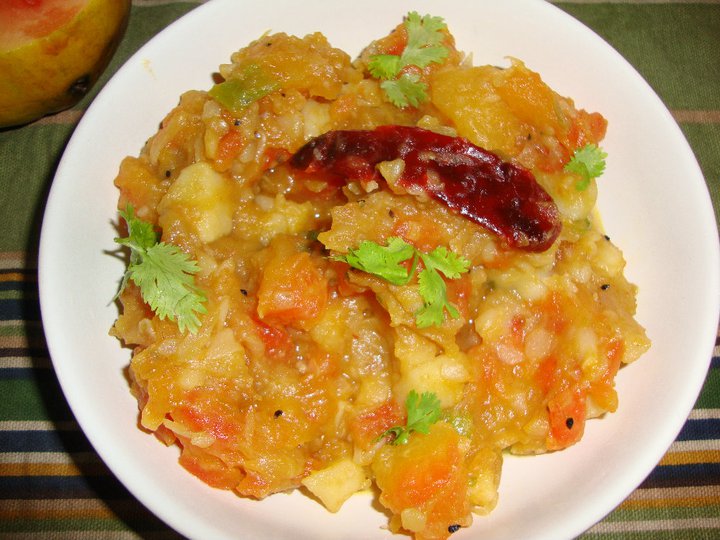
Papaya Khar is a traditional Assamese dish that combines ripe or semi-ripe papaya with an alkaline ingredient called Khar, which is unique to Assamese cuisine. It’s a signature preparation often served at the beginning of a traditional meal to help with digestion.
🍛 What is Khar?
Khar is an alkaline extract made from sun-dried banana peels (typically from the “Bheem Kol” variety in Assam) that are burnt to ash and then filtered with water. This water is the base of many Assamese dishes and gives a distinct earthy, soapy, and slightly bitter flavor.
🥣 Ingredients (for Papaya Khar)
- Raw papaya – 1 medium-sized (peeled and diced)
- Mustard oil – 2 tbsp
- Khar (banana ash extract) – 1/2 cup (or use baking soda as a substitute, though it’s not the same)
- Green chilies – 2-3 (slit)
- Panch phoran or fenugreek seeds – 1/2 tsp
- Salt – to taste
- Turmeric powder – a pinch (optional)
👨🍳 Preparation
- Make the Khar:
- Burn dried banana peels to ash, mix with water, and filter. Set aside the alkaline water.
- If unavailable, use a small pinch of baking soda in water (not authentic but common substitute).
- Cook the Papaya:
- Heat mustard oil in a pan.
- Add fenugreek seeds or panch phoran and let them splutter.
- Add green chilies and papaya pieces. Sauté for a few minutes.
- Add turmeric (optional) and salt.
- Pour in the Khar water (enough to cook the papaya).
- Cover and cook until the papaya is soft and cooked through.
- Final Touch:
- Let the curry reduce to a slightly thick consistency.
- Serve warm with plain rice.
🍽️ Serving Suggestion:
- Papaya Khar is always served with rice and usually at the start of the meal.
- It pairs well with other traditional Assamese sides like tenga (sour fish curry) or pitika (mashed vegetables with mustard oil).
🥭 Papaya Khar – FAQ
1. What is Khar, and why is it used?
Khar is a traditional alkaline filtrate made by burning sun-dried banana peels (typically the “Bheem Kol” variety in Assam) and filtering the ash through water. It acts as both a digestive aid and flavor enhancer. It’s unique to Assamese cuisine and is used in many dishes, not just with papaya.
2. Can I make Papaya Khar without traditional Khar?
Yes, you can substitute it with a small pinch of baking soda, but the taste will not be the same. It’s a workaround often used outside Assam when traditional Khar is unavailable.
3. Is Papaya Khar vegetarian?
Yes, it is typically a vegetarian dish, made with raw papaya, mustard oil, and spices. Some versions may include dried fish or shrimp for flavor, but the traditional version is purely plant-based.
4. What kind of papaya is used?
Raw or semi-ripe papaya is used. It should be firm and not sweet. Ripe papaya will make the dish too soft and sweet, which is not ideal for this savory preparation.
5. Is Papaya Khar served hot or cold?
It is served hot or warm, typically as the first course in a traditional Assamese meal.
6. Is this dish spicy?
Not really. The heat comes mainly from green chilies, which can be adjusted to taste. It’s generally mild and soothing.
7. Can I use Khar with other vegetables?
Absolutely! Khar is also used with:
- Lauki (bottle gourd)
- Kolposola (banana stem)
- Mati aloo (baby potatoes)
- Raw banana
8. Where can I buy Khar outside Assam?
It’s rarely found outside the region. If you’re outside Assam:
- Try Assamese or Northeastern India grocery stores.
- You can make it at home if you have access to the right variety of banana peels.
- Otherwise, use a substitute like baking soda—but it won’t have the authentic flavor.
9. Does Khar have any health benefits?
Yes! It is believed to:
- Aid in digestion
- Act as a natural cleanser
- Balance pH levels in the stomach


What’s up, after reading this amazing post i am also happy to
share my knowledge here with colleagues.