





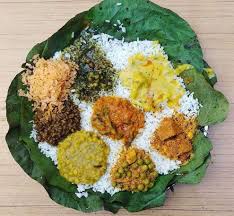
Typical Himachali Dham (Mandi/Kullu/Kangra styles vary slightly)
Himachali Dham is a traditional festive meal from Himachal Pradesh, India, known for its unique flavors, religious significance, and elaborate vegetarian spread. It is typically served during weddings, religious functions, and festivals. Let’s explore both its history and recipes in detail.
🏔️ History of Himachali Dham
- Origin: The tradition of Dham dates back to the 11th century during the reign of King Jaistambh of Chamba, who invited Brahmin cooks from the Kashmir region. These cooks, known as Botis, started preparing this festive feast for royal events.
- Cultural Significance: Dham is a sacred meal, often prepared as a prasad (offering) during Hindu festivals and functions. It must be vegetarian and sattvik (no onion, garlic, or tomatoes in traditional versions).
- Preparation & Serving:
- Cooked by Botis in large copper vessels called “charoti”.
- Served on leaf plates while seated on the ground.
- Always follows a specific sequence of dishes.
Here’s a common menu with recipes from the Mandi style Dham:
1. Chana Madra (Curd-based Chickpea Curry)[Himachali Dham]
Ingredients:
- Kabuli chana (chickpeas)
- Curd (whisked)
- Ghee, Hing, Jeera, Saunf, Cinnamon, Clove, Bay leaf
- Besan (gram flour), turmeric, red chili powder, salt
Method:
- Soak and boil chickpeas.
- In ghee, add spices and besan; sauté.
- Add whisked curd slowly while stirring to avoid curdling.
- Add boiled chickpeas and simmer till thick.
2. Rajma or Kidney Bean Curry (Himachali style)[Himachali Dham]
Ingredients:
- Rajma (kidney beans), curd, ginger, green chilies
- Ghee, coriander powder, turmeric, bay leaf, cloves
Method:
- Cook soaked rajma till soft.
- In ghee, sauté spices and mix with curd.
- Add rajma and simmer till flavorful.
3. Madhra of Other Pulses (Rajma/Moong/Chana variants)[Himachali Dham]
(Similar process as Chana Madra but using different dals for Himachali Dham)
4. Khatta (Sweet & Sour Pumpkin or Tamarind Curry)[Himachali Dham]
Ingredients:
- Pumpkin pieces or dry mango/amchur or tamarind
- Jaggery or sugar
- Besan, mustard seeds, curry leaves
Method:
- Cook pumpkin.
- In ghee, make tadka with mustard seeds, hing, and curry leaves.
- Add besan, tamarind/amchur, and jaggery.
- Mix and cook till thick and tangy.
5. Sepu Vadi (Lentil Dumplings in Gravy)[Himachali Dham]
Ingredients:
- Urad dal (split black gram), spinach
- Besan, curd, spices
Method:
- Make vadi (dumplings) from urad dal paste and steam them.
- Fry and add them to curd-based gravy with spices.
6. Teliya Mah (Black Lentil Curry)[Himachali Dham]
Ingredients:
- Whole urad dal (mah), mustard oil, ginger
- Curd, dry spices
Method:
- Boil the dal.
- Prepare mustard oil-based gravy with spices and curd.
- Mix and simmer.
7. Rice
All dishes are served over steamed rice, one after the other in a set sequence.
🪔 Serving Style[Himachali Dham]
- First course: Rice with madra
- Then rajma or sepu vadi
- Then khatta
- Curd/dahi may be served to end the meal
- Accompanied by boondi or meetha bhaat (sweet rice) sometimes
📜 Summary
| Feature | Details |
|---|---|
| Origin | Chamba, Himachal Pradesh |
| Cultural Role | Ritual feast for weddings, festivals |
| Meal Type | Vegetarian, Sattvik |
| Cooking Style | Traditional botis using ghee and curd |
| Served On | Leaf plates (pattal), while seated on floor |
📘 Himachali Dham – FAQ
❓ What is Himachali Dham?
Himachali Dham is a traditional multi-course vegetarian feast from Himachal Pradesh, served during religious functions, weddings, and festivals. It’s made with curd-based gravies, lentils, and pulses, and served with rice on leaf plates.
❓ Who cooks the Dham?
Traditionally, Botis (a community of hereditary Brahmin cooks) prepare Dham. They are specially trained and cook the meal in large copper vessels (charoti) over a wood fire.
❓ What makes Dham different from other Indian thalis?
- No onion or garlic (Sattvik)
- Heavy use of curd, ghee, and aromatic spices
- Dishes follow a strict sequence
- Deep cultural and religious significance
❓ Is Dham always vegetarian?
Yes, Dham is always vegetarian and often sattvik, making it suitable for religious occasions.
❓ What are the key dishes in Himachali Dham?
While dishes vary by region, a typical Dham includes:
- Chana Madra (curd-based chickpeas)
- Rajma/Red kidney bean curry
- Khatta (sweet-sour dish)
- Sepu Vadi (lentil dumplings in gravy)
- Teliya Mah (black lentils)
- Rice and sometimes Meetha Bhaat (sweet rice)
❓ Are there different styles of Dham?
Yes, styles vary across regions:
- Kullu Dham: lighter, more rajma and moong dal
- Mandi Dham: rich in curd-based dishes like madra
- Kangra Dham: includes khatta, sepu vadi, mah
❓ Can I cook Dham at home?
Absolutely! Though traditionally prepared by Botis, home cooks can recreate it using:
- Basic Indian spices
- Curd, lentils, and rice
- Ghee (instead of oil for authenticity)
❓ Is Dham served in any restaurants?
A few Himachali restaurants or homestays offer Dham, especially in tourist towns like Shimla, Manali, and Dharamshala. Some festivals also feature it.
❓ Is there a non-veg version of Dham?
No, Dham is strictly vegetarian by tradition and used in religious and community feasts.
Pootharekulu (Paper Sweet) – Andhra Pradesh Special Sweet Recipe


