





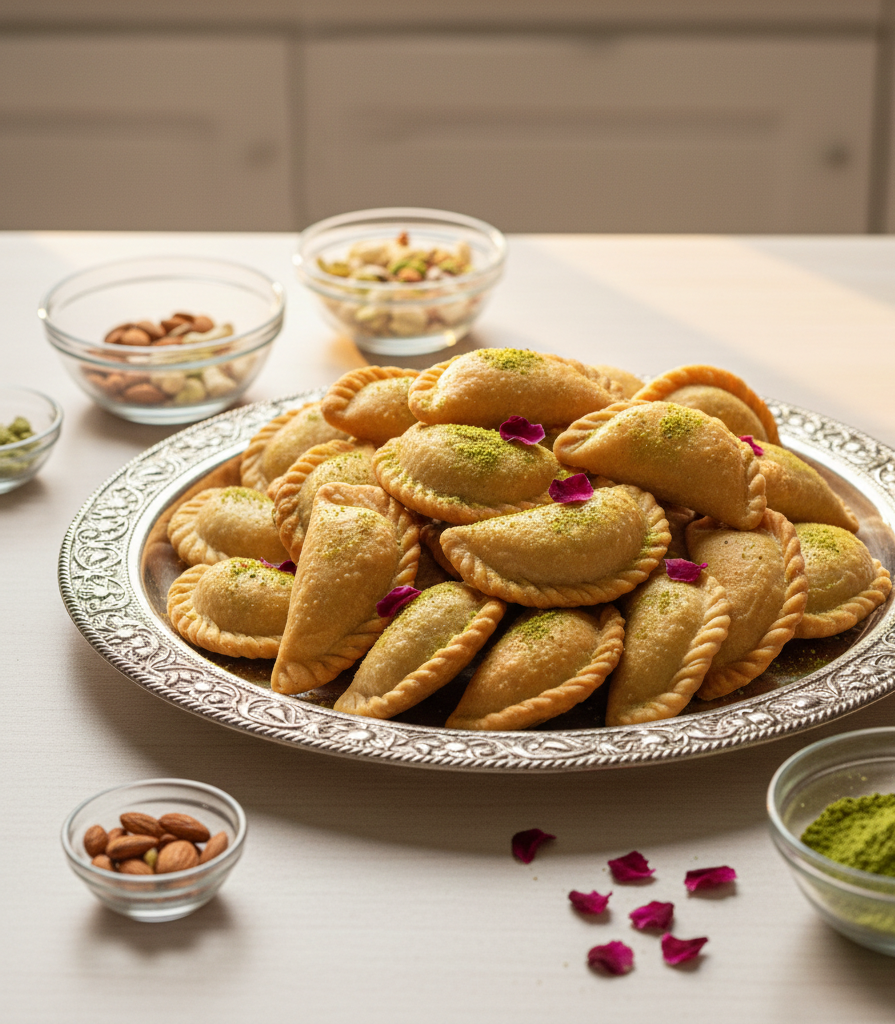
Are you ready to bring the taste of Indian festivities into your kitchen? Authentic Ghughra Recipe(also known as Gujiya) is a traditional deep-fried dumpling stuffed with a rich mixture of mava (khoya), dry fruits, and aromatic cardamom. Whether it’s for Diwali, Holi, or just a weekend craving, this step-by-step guide ensures a perfect, flaky crust every time.
🛒 Ingredients You’ll Need Authentic Ghughra Recipe
For the Crispy Pastry (Dough):
- All-purpose flour (Maida): 2 cups
- Ghee (Clarified Butter): 1/4 cup (crucial for that “Moyen” flakiness)
- Water: As needed (approx. 1/2 cup)
- Salt: A pinch to balance the sweetness
For the Sweet Nutty Filling:
- Mava/Khoya: 1 cup (crumbled)
- Semolina (Rava/Sooji): 2 tbsp (optional, for crunch)
- Powdered Sugar: 3/4 cup (adjust to taste)
- Dry Fruits: 1/2 cup (chopped almonds, cashews, and pistachios)
- Cardamom Powder: 1 tsp
- Nutmeg Powder: A tiny pinch
👩🍳 Step-by-Step Making Process
Step 1: Prepare the “Moyen” Dough
The secret to a non-oily, crispy Ghughra is the Moyen.
- Mix the flour and salt in a bowl.
- Add the melted ghee and rub it into the flour with your fingertips until the mixture resembles breadcrumbs and holds its shape when pressed in your palm.
- Gradually add cold water and knead into a stiff, firm dough. Cover with a damp cloth and rest for 30 minutes.


Step 2: Sauté the Filling
- In a pan, roast the crumbled mava on low heat until it turns slightly golden and aromatic.
- If using semolina, roast it separately in a teaspoon of ghee until golden.
- Let the mixture cool completely. Pro Tip: Adding sugar to hot mava will make it watery!
- Once cool, mix in the powdered sugar, chopped nuts, and spices.


Step 3: Shaping the Ghughra
- Divide the dough into small, lemon-sized balls. Roll them out into small circles (about 3-4 inches).
- Place a tablespoon of filling in the center.
- Lightly moisten the edges with water. Fold the dough over to create a semi-circle.
- The Signature Edge: Use a Ghughra cutter, a mold, or use your thumb and forefinger to “pinch and fold” the edges to create the traditional pleated pattern shown in your photo.


Step 4: The Perfect Fry
- Heat oil or ghee in a deep pan on low-medium heat.
- Gently slide the Ghughra in. Do not overcrowd the pan.
- Fry slowly, turning occasionally, until they reach a beautiful golden-brown hue.
- Drain on paper towels.

💡 Top Tips for Success
- Don’t Rush: Frying on high heat will cause bubbles on the crust and leave the inside dough raw. Low and slow is the way to go!
- Seal it Tight: Ensure the edges are sealed perfectly, or the filling will leak and ruin the frying oil.
- Storage: Once completely cooled, store them in an airtight container. They stay fresh for up to 2 weeks.
❓ Frequently Asked Questions (FAQ)
Why did my Ghughra get soft after cooling?
Ghughra usually turns soft if it was fried on high heat. If the outside browns too quickly, the inner layer of the dough remains slightly raw and retains moisture. Always fry on low-medium heat for a long-lasting crunch.
Can I make Ghughra without Mava (Khoya)?
Absolutely! You can use a roasted Semolina (Sooji) and Desiccated Coconut filling instead. This version also has a longer shelf life (up to 3-4 weeks) compared to the mava version.
How do I prevent the Ghughra from bursting in the oil?
Two main things:
Seal the edges with a little water or a milk-flour paste.
Avoid overstuffing. If there is too much filling, the steam inside will cause the pastry to crack during frying.
. Can I bake or air-fry Ghughra?
Yes! For a healthier twist, brush them with ghee and bake at 180°C for 15-20 minutes or air-fry at 180°C for 10-12 minutes until golden. Note: The texture will be more biscuit-like rather than the traditional flaky puff.
How long can I store Mava Ghughra?
Since mava is a dairy product, these stay fresh at room temperature for about 4-5 days. If you want them to last longer (up to 10 days), store them in an airtight container in the refrigerator and warm them slightly before serving.
Why did my Ghughra develop bubbles on the crust?
Bubbles usually appear if the oil was too hot when you added the Ghughra. To get a smooth, professional finish, the oil should be medium-hot. Drop a small piece of dough; it should take a few seconds to rise to the surface.
How do I keep them crispy for a long time?
The secret is the “Moyen” (adding ghee to the flour before kneading) and slow frying. If you fry them quickly, they will be soft by the next day. Also, wait for them to reach room temperature before putting them in an airtight container.
Can I air-fry or bake Ghughra?
Yes! For a healthier version, brush them with ghee and air-fry at 180°C for 10-12 minutes or bake in a preheated oven until golden. They will be less flaky than the fried version but still delicious.
Ghughra vs. Gujiya vs. Karanji diffrents?


These three are the most commonly confused. While the shape is the same, the filling is the key:
Ghughra (Gujarat): Often features a rich mix of nuts, mava, and sometimes toasted semolina. It is known for its heavy “pinch-and-fold” edge design.
Gujiya (North India): Traditionally stuffed with Mava (Khoya) and sugar. It’s often dipped in sugar syrup (Chashni) after frying for an extra-sweet glaze.
Karanji (Maharashtra): Typically uses grated coconut and poppy seeds (khus khus) with jaggery or sugar. It is usually crispier and thinner than a Ghughra.


