





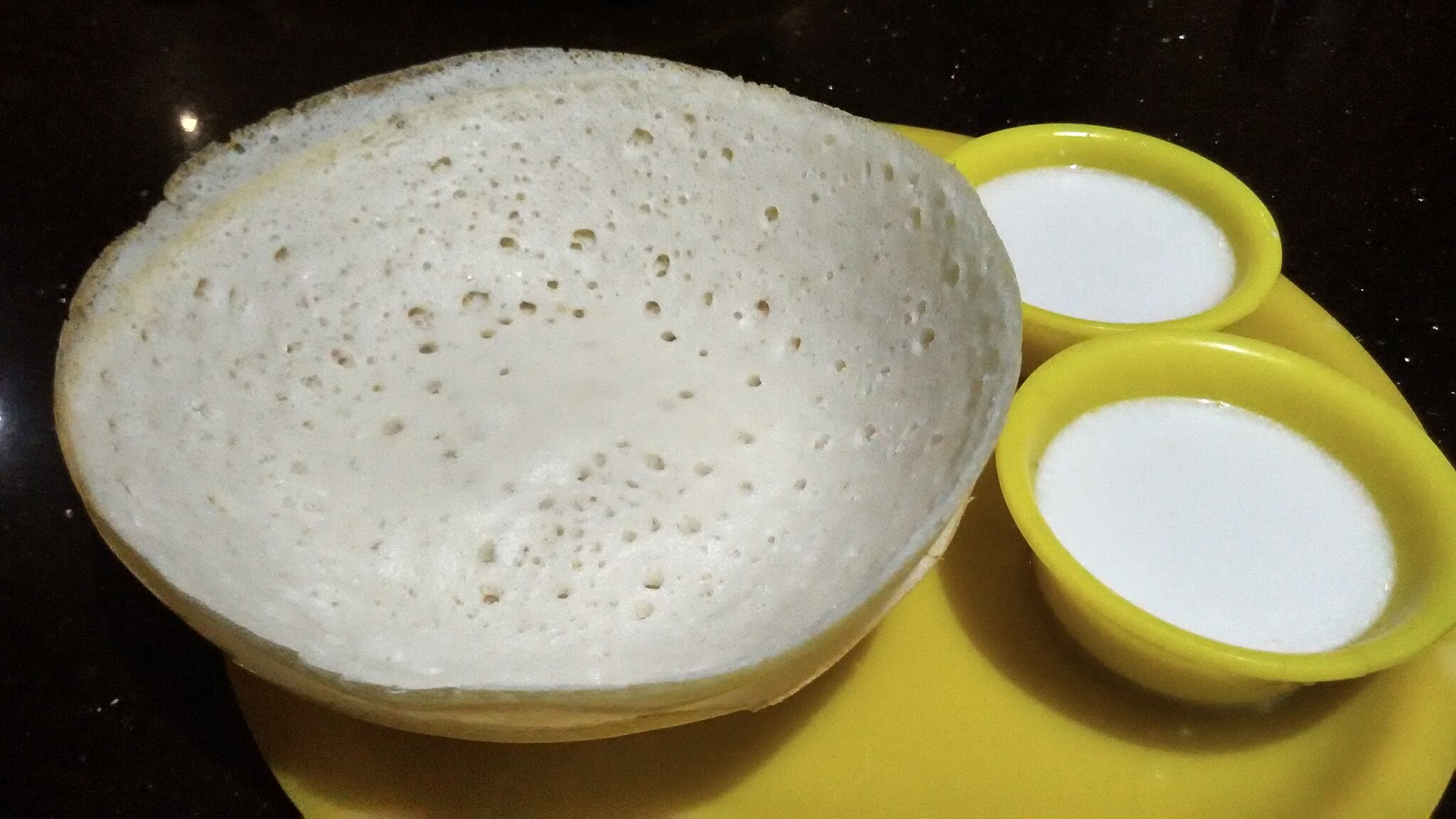
Appam — its Kerala origins, cultural history, and traditional recipes
📜 History & Origin of Appam
Appam, also known as Palappam, is a soft, lacy rice pancake that originated in Kerala, South India, and is deeply rooted in the Syrian Christian culinary tradition. It dates back over 1,000 years, with influences from Tamil Sangam-era cooking and foreign traders (Arab, Portuguese) who introduced fermentation techniques.
- Appam is closely tied to Christian festivals like Easter and Christmas in Kerala.
- It was historically cooked in mann chatti (clay pans) and served with rich coconut milk curries.
- The use of fermentation (via toddy or yeast) was a skill passed through generations, giving appam its signature texture — crispy lace edges with a soft, fluffy center.
🍽️ Traditional Appam Recipe (Kerala Style)
✳️ Ingredients:
- Raw rice – 1 cup
- Cooked rice – 2 tbsp
- Grated coconut – ½ cup
- Sugar – 1 to 2 tbsp
- Salt – to taste
- Instant yeast – ½ tsp (or toddy if traditional)
- Water – as needed
🥣 Instructions:
- Soak & Grind:
- Soak raw rice for 4–6 hours.
- Blend soaked rice, cooked rice, grated coconut, and water to form a smooth batter.
- Ferment:
- Add yeast and sugar, mix well.
- Let it ferment overnight or 8 hours.
- Prepare Batter:
- After fermentation, the batter will rise.
- Add salt and a little more water if needed (thin pouring consistency).
- Cook Appam:
- Heat an appachatti (appam pan), lightly grease it.
- Pour a ladle of batter, swirl the pan to spread the batter thin at the edges.
- Cover and cook on medium heat for 2–3 minutes until the center is soft and edges are crisp.
- Serve Hot:
- With vegetable stew, egg curry, or chicken/mutton ishtu (Kerala coconut milk curry).
🙋♀️ Frequently Asked Questions About Kerala Appam
Q1. What is Kerala Appam made of?
A: Kerala-style Appam is made from fermented rice batter, coconut, and either yeast or toddy for leavening. It has a soft, fluffy center and lacy, crisp edges.
Q2. What is the difference between Appam and Dosa?
A: Appam is soft and spongy in the center with crispy sides, made with coconut and rice. Dosa is thinner, crisp, and made with a rice-lentil batter without coconut.
Q3. Can I make Appam without yeast?
A: Yes. Traditionally, Appam is fermented using toddy (palm wine), or you can use natural fermentation by leaving the batter out for 8–12 hours in a warm place.
Q4. What do you serve with Appam?
A: Appam is best served with Kerala-style vegetable stew, chicken or egg curry, or coconut milk sweetened with jaggery.
Q5. Is Appam gluten-free?
A: Yes! Appam is naturally gluten-free since it’s made entirely from rice and coconut.
Q6. How long should I ferment Appam batter?
A: With yeast: about 6–8 hours. Without yeast: 10–12 hours or overnight in a warm place until bubbly and risen.
Q7. Can I use store-bought rice flour for Appam?
A: Yes, but texture may differ slightly. Using soaked raw rice and grinding it fresh gives the best authentic texture and flavor.
Q8. Is Appam eaten for breakfast or dinner?
A: Appam is commonly eaten for breakfast, but it’s also enjoyed during festive dinners and special occasions in Kerala households.
🌾 Similar Dishes to Appam (Across Regions)
1. Idiyappam (String Hoppers) – Tamil Nadu / Kerala / Sri Lanka
- Made from: Rice flour, pressed into noodles and steamed
- Texture: Soft, stringy
- Served with: Coconut milk, curries, sugar & ghee
- Similarity: Rice-based & often eaten with the same side dishes
2. Vella Appam (Sweet Appam) – Kerala
- Made with: Jaggery, banana, rice flour
- Texture: Soft, pancake-like
- Served as: Snack or prasad
- Similarity: Uses rice and coconut, same name but sweeter
3. Kalappam / Vattayappam – Kerala
- Kalappam: Soft appam cooked without swirling, often thicker
- Vattayappam: Steamed rice cake version
- Similarity: Same fermented batter base
4. Neer Dosa – Karnataka (Tulu Cuisine)
- Made with: Soaked rice & water, no fermentation
- Texture: Thin, soft, lacy edges like appam
- Similarity: Coconut-based curry pairing, lacy crepe form
5. Hoppers – Sri Lanka
- Made with: Rice flour and coconut milk (like appam), sometimes with an egg in the center (egg hopper)
- Similarity: Nearly identical in taste and preparation; Sri Lankan version of Kerala Appam
6. Pathiri – Malabar (Kerala Muslim cuisine)
- Made with: Rice flour dough, rolled and cooked like a flatbread
- Texture: Soft, thin roti-like
- Similarity: Rice-based staple, eaten with coconut curries
7. Paal Appam (Milk Appam) – Tamil Nadu
- A sweeter version of Appam served with thick coconut milk or sweetened milk
- Similarity: Same base with sweet toppings


